Orly Beauty

Year
2025
Duration
6 Months
Role
Product Designer
Team
Ramon Martinez - Sr. Product Designer

Orly Beauty is a well-known nail care brand with high-quality polishes and treatments. They asked me to update their old website. Seeing an opportunity to make a lasting impact, I couldn't wait to get started.

For three months, I learned about their brand, culture, and business goals.

In the end, I created a user-friendly site that increased sales and gave their online brand a fresh new look.

Orly Beauty

Year
2025
Duration
6 Months
Role
Product Designer
Team
Ramon Martinez - Sr. Product Designer

Orly Beauty is a well-known nail care brand with high-quality polishes and treatments. They asked me to update their old website. Seeing an opportunity to make a lasting impact, I couldn't wait to get started.

For three months, I learned about their brand, culture, and business goals.

In the end, I created a user-friendly site that increased sales and gave their online brand a fresh new look.

Orly Beauty

Year
2025
Duration
6 Months
Role
Product Designer
Team
Ramon Martinez - Sr. Product Designer

Orly Beauty is a well-known nail care brand with high-quality polishes and treatments. They asked me to update their old website. Seeing an opportunity to make a lasting impact, I couldn't wait to get started.

For three months, I learned about their brand, culture, and business goals.

In the end, I created a user-friendly site that increased sales and gave their online brand a fresh new look.

Many of my designs were built and are currently live on Orly's site.

Results

Refined Search

Fragmented polish categories were grouped into clear collections, removing decision paralysis and helping customers find relevant products faster.

+18% Order Volume

A clear visual hierarchy surfaced complementary products at key moments, encouraging larger baskets through helpful discovery, not pushy tactics.

+47 CSAT

Confusing navigation and filters were redesigned across search and PDPs, reducing frustration and directly increasing customer satisfaction scores.

+28% Conversion Rate

Improved product organization and a streamlined purchase flow reduced drop-off, helping customers complete transactions faster and with confidence.

Opportunity

Aid Discovery

Organize 600+ products into intuitive collections aligned with customer needs.

User Friction

Transform search results into curated categories aligned with customers

Modern UX

Align interface with current
e-commerce standards customers expect.

Catalog Logic

Restructure catalog by color, finish, and formula to match shopping behaviors.

Challenges

Outdated UX

Overly complex site hindered product discovery and purchase completion flows.

Market Share

Competitors offered modern experiences. Customers were shopping elsewhere instead.

Disjointed UI

Inconsistent design system created fragmented UX & undermined trust.

Tight Budget

Limited resources and tight timeline demanded practical, implementable designs.

Discovery

To start, I conducted a UI/UX audit focusing on
• User journey from entry -> checkout
• Site Navigation
• Typography patterns, styles and structure sitewide

The audit revealed two key areas that would have the most impact on improving user experience.

These areas became the focus of my strategy

Site Navigation

Product Discovery

Site Navigation

Users faced a flat navigation structure where primary categories looked identical to subcategories, making it difficult to quickly orient themselves within Orly's product catalog

User Experience

Streamlined navigation reduces cognitive load, helping users move from browsing to purchase with less friction

Hierarchy

Distinct visual weight between primary and secondary navigation helps users orient themselves and explore systematically.

Appeal

Polished design reinforces brand quality while improved organization makes the catalog feel curated, not cluttered.
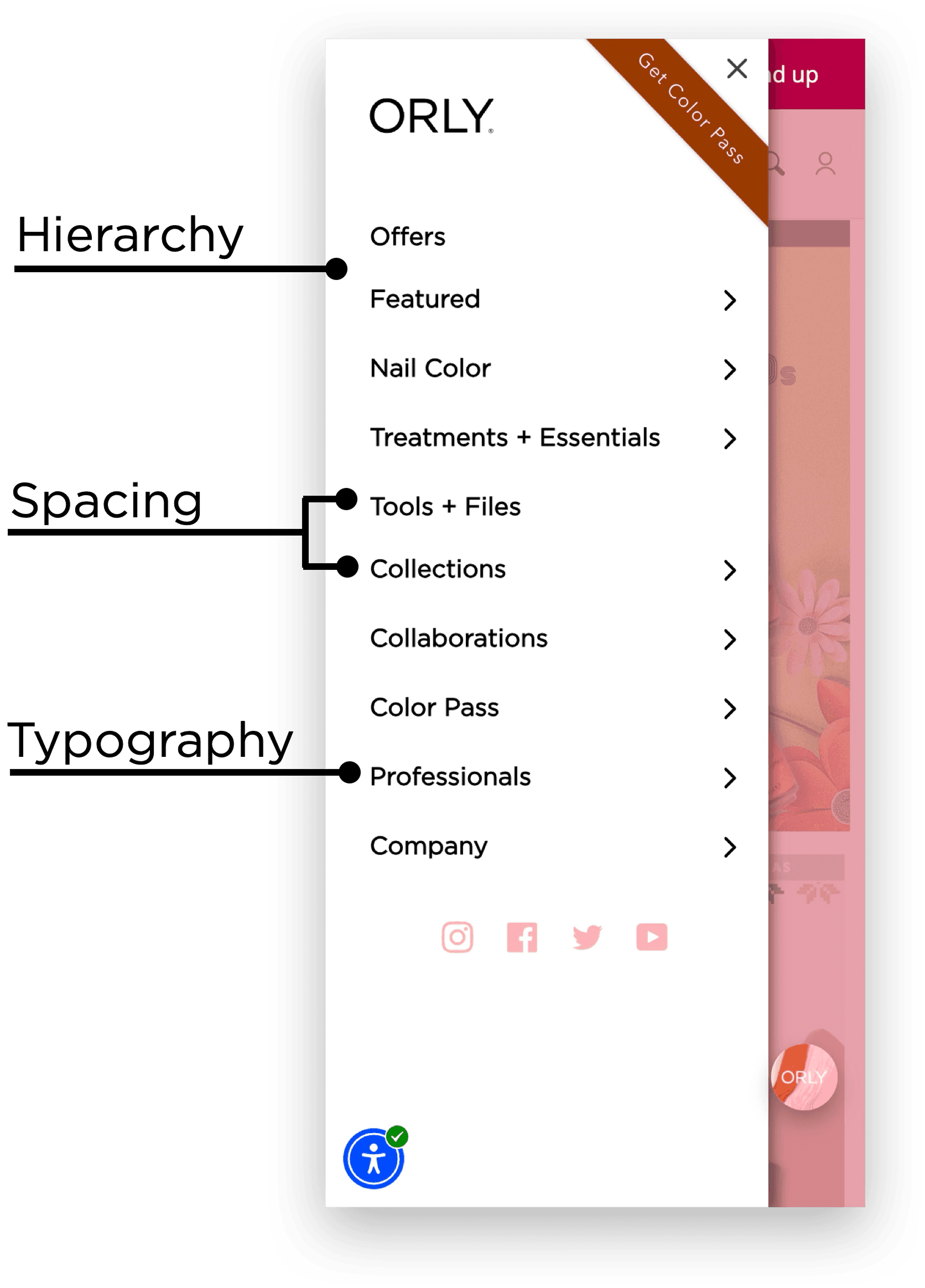
The current drawer menu lacks a clear visual hierarchy to distinguish main categories from subcategories

Product Discovery

Orly's 600+ individual product listings made discovery nearly impossible.

Users couldn't efficiently compare colors within a product line, and unreliable page transitions between variants created friction at the critical moment of color selection.

Encourage Discovery

Simplified discovery transforms overwhelming choice into confident exploration, encouraging users to browse beyond their initial search.

Reduce Friction

Instant color switching or relevant products within product families eliminates navigation friction at the critical point of shade selection.

Reduce Abandonment

Eliminating discovery friction keeps users engaged through checkout rather than leaving to search competitor sites

Exploring Orly's site was a buggy and frustrating experience
Research

Assumptions

I crafted assumptions of how I felt Orly's product lineup should be handled. But I didn't have much time or any resources to conduct formal user research.

So, I made a simple card sort activity using Miro on my iPad. I talked to people shipping at my local Target & Sephora ,who matched Orly’s main shoppers:

  • Women 30-55+

  • Care about healthy, cruelty-free

  • Value affordable products.

I asked each person to put different product types into set categories. Each interview took 3-5 minutes, and I gave each person a $25 gift card as a thank you.

After talking to 10 people, I had enough feedback to help organize Orly’s products in a way that made sense to shoppers.

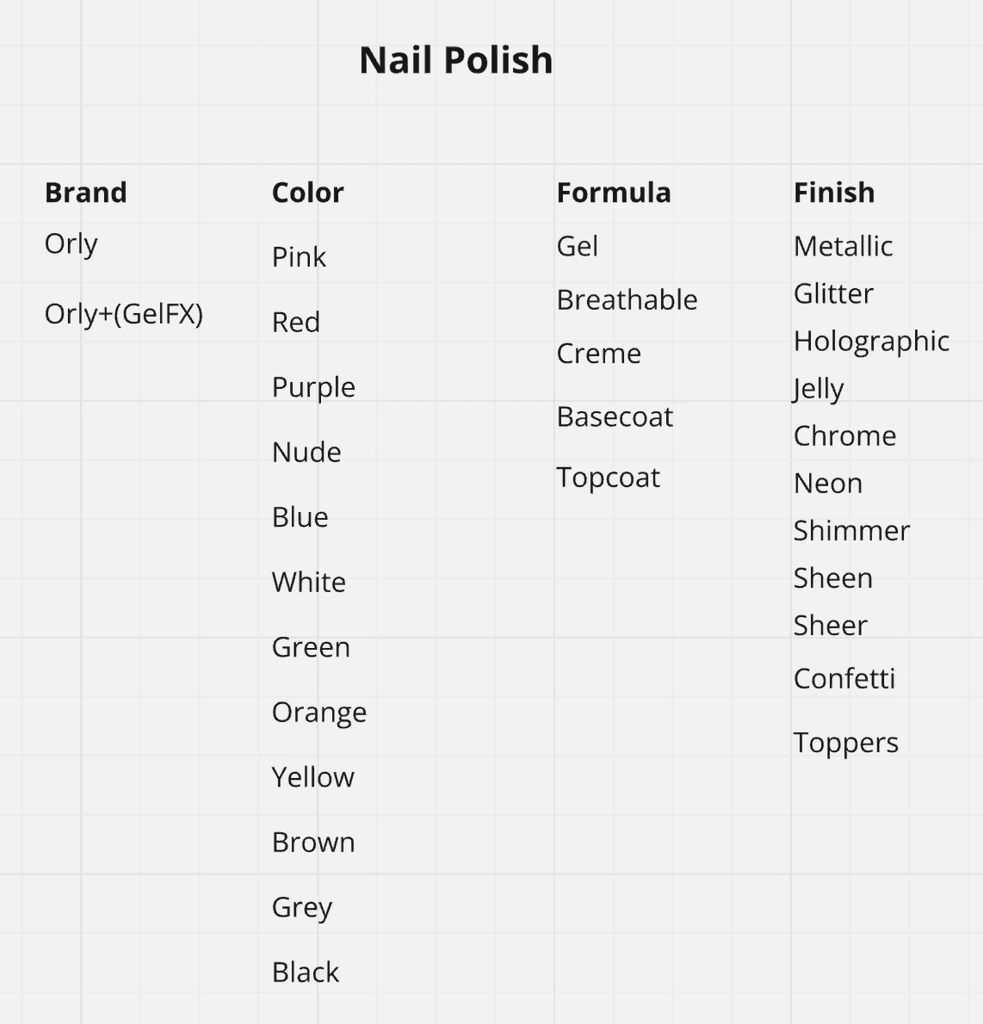
Miro Board where participants could drag & drop how they felt products should be organized

Key Finding

While ideating on designs, I began to notice that the Orly handled each shade, color or finish as an entirely separate product.

With so many variants of similarly branded products, how would a set of swatches on a product page display the correct shades associated with that specific line within Orly's brand

Discovery

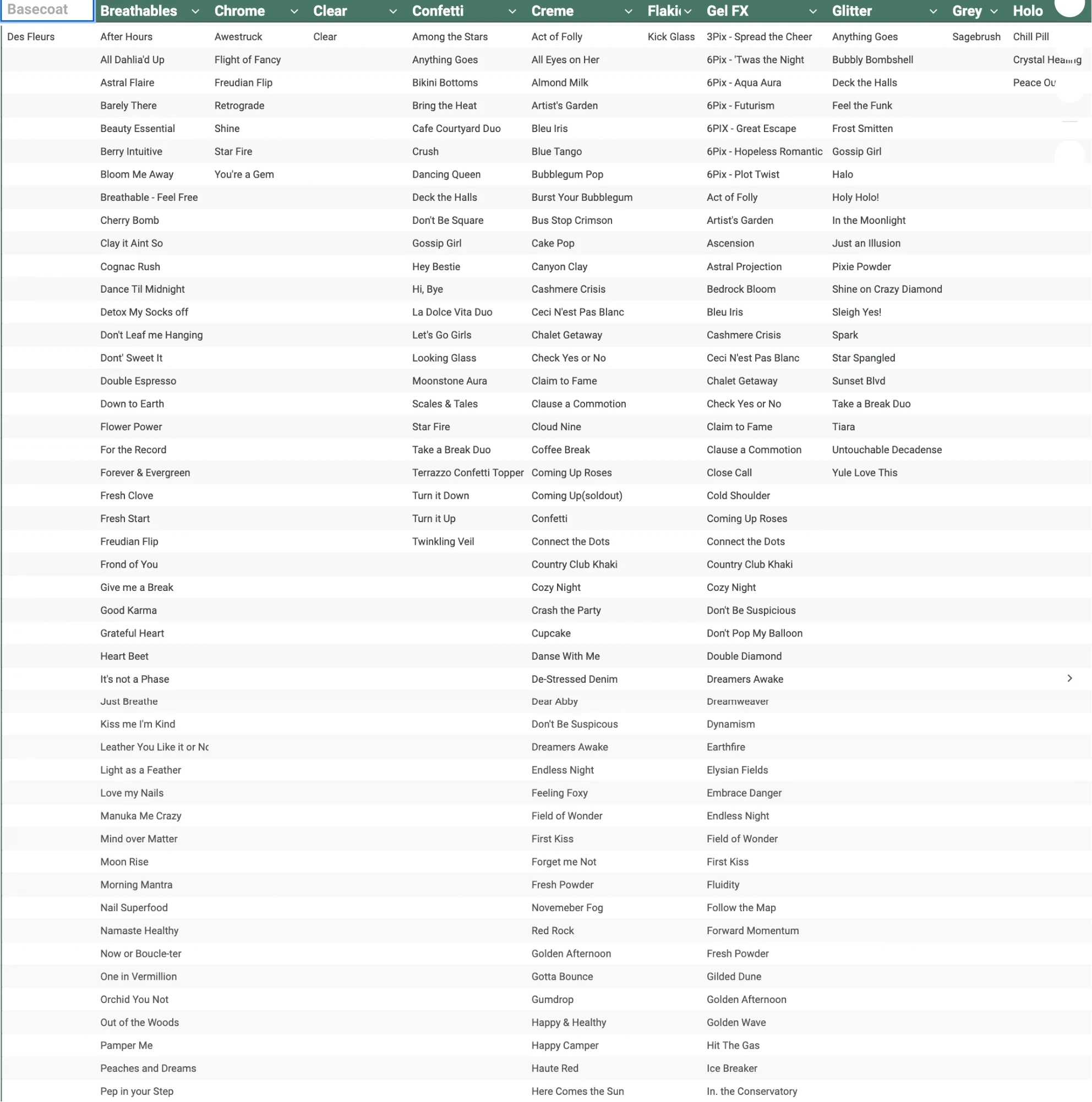
I made a spreadsheet listing every product Orly offered, this helped me gain:

Hollistic View of Products
I could spot which products were similar, how they were grouped & organized, and how big each category was.

Find Gaps in Catalog
I noticed where the current system was confusing or could be improved.

Plan better navigation
With everything organized, I could design menus and categories that match how customers actually search by color, finish, or type.

Research

Discovery

To dive deeper, I made a spreadsheet listing every product Orly offered, this helped me gain:

Hollistic View of Products
I could spot which products were similar, how they were grouped & organized, and how big each category was.

Find Gaps in Catalog
I noticed where the current system was confusing or could be improved.

Plan better navigation
With everything organized, I could design menus and categories that match how customers actually search by color, finish, or type.

Key Finding

I noticed Orly's product architecture treats every shade and finish as a distinct product.

The challenge became: How do I design swatches that intelligently filter to show only the relevant variants for each collection?

Discovery

I made a spreadsheet listing every product Orly offered, this helped me gain:

Hollistic View of Products
I could spot which products were similar, how they were grouped & organized, and how big each category was.

Find Gaps in Catalog
I noticed where the current system was confusing or could be improved.

Plan better navigation
With everything organized, I could design menus and categories that match how customers actually search by color, finish, or type.

Key Finding

I noticed Orly's product architecture treats every shade and finish as a distinct product.

The challenge became: How do I design swatches that intelligently filter to show only the relevant variants for each collection?

Assumptions

I crafted assumptions of how I felt Orly's product lineup should be handled. But I didn't have much time or any resources to conduct formal user research.

So, I made a simple card sort activity using Miro on my iPad. I talked to people shipping at my local Target & Sephora ,who matched Orly’s main shoppers:

  • Women 30-55+

  • Care about healthy, cruelty-free

  • Value affordable products.

I asked each person to put different product types into set categories. Each interview took 3-5 minutes, and I gave each person a $25 gift card as a thank you.

After talking to 10 people, I had enough feedback to help organize Orly’s products in a way that made sense to shoppers.

Miro Board where participants could drag & drop how they felt products should be organized

Solutions

V1- Modal

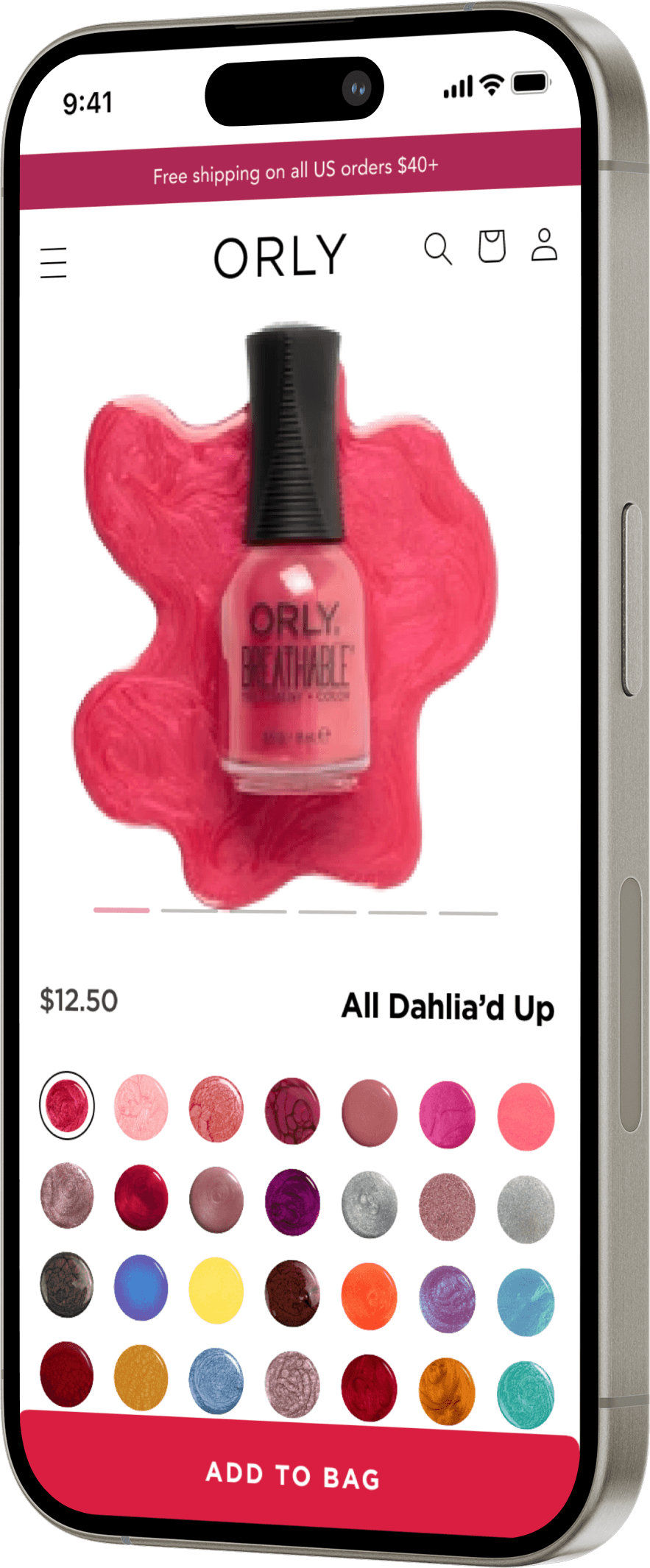
The modal approach displayed all color variants in an overlay, triggered by 'View More' beneath initial swatches. Users could scroll through options with large thumbnail previews and complete their purchase without leaving the modal.

V2- Carousel

The carousel kept color selection inline with the product image, avoiding modal overlays. 'View More' expanded swatches into a 5×6 paginated grid, with hero images and product names updating automatically as users browsed colors.
Real-World Prototype

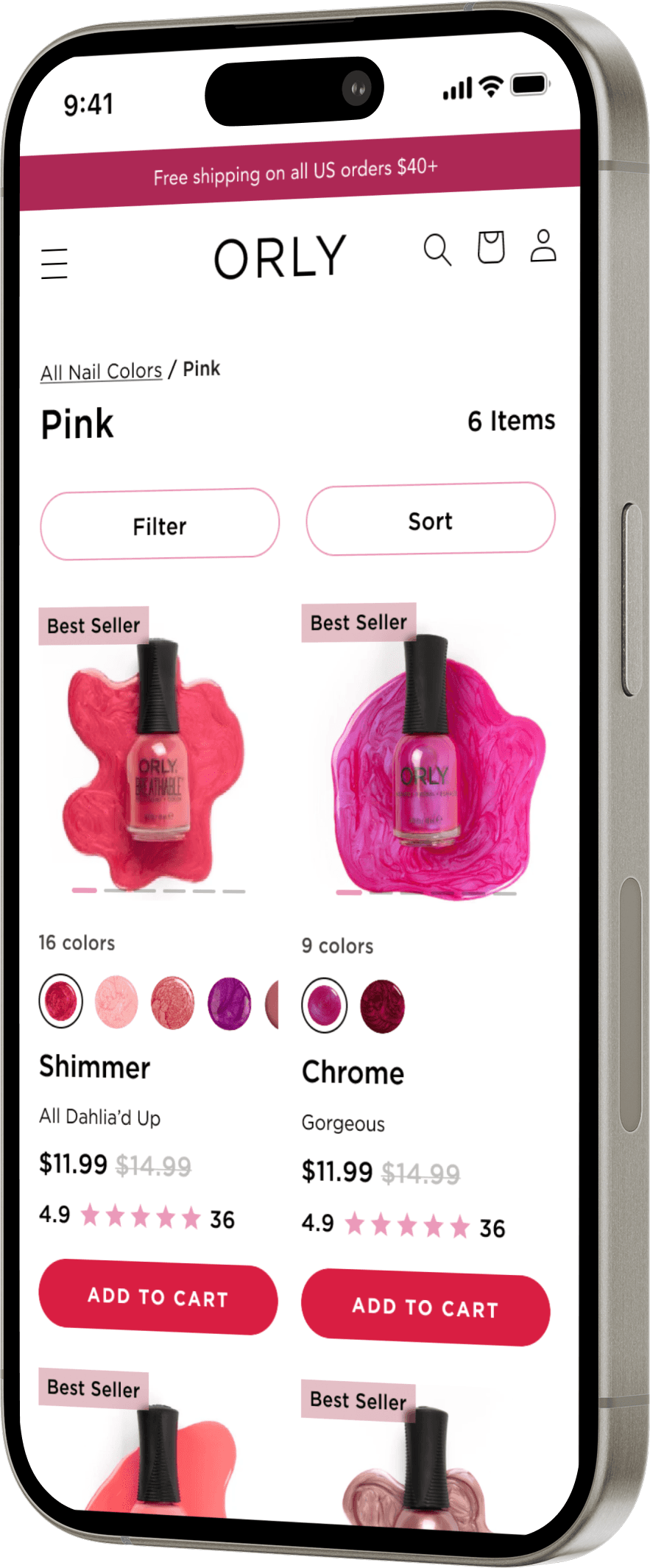
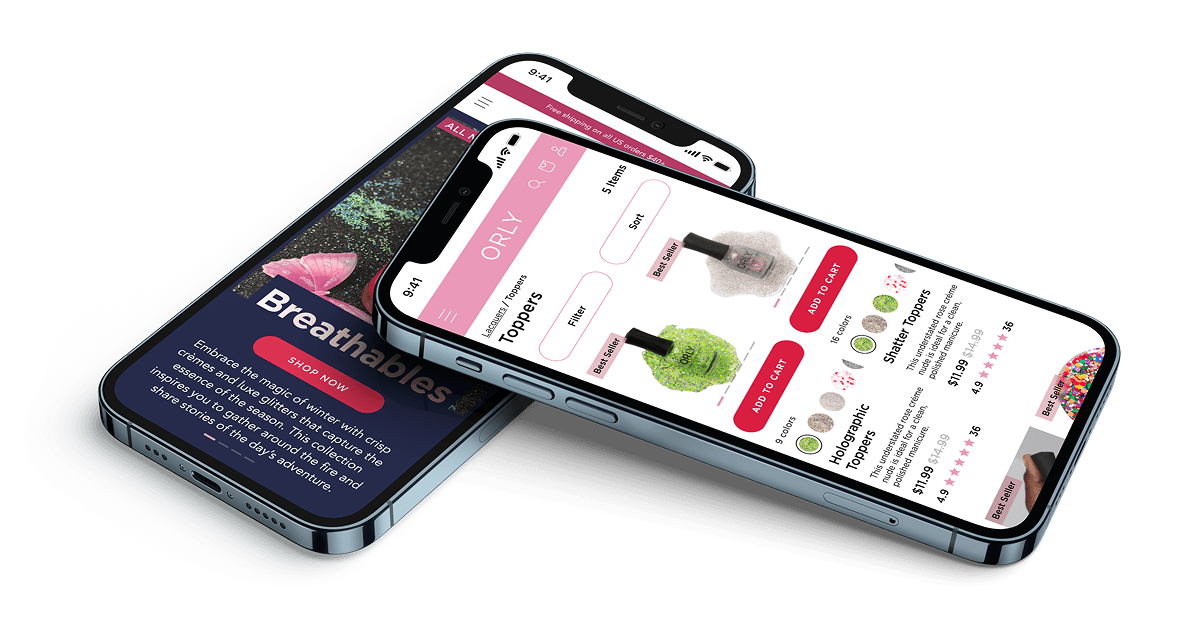
I redesigned the complete shopping journey, transforming how customers discover and purchase products.

Core changes:

  • Reorganized navigation around customer shopping behavior (color, finish, formula)

  • Introduced interactive color swatches reducing the need to visit multiple product pages

  • Streamlined product taxonomy reducing search results by 88%

  • Improved visual hierarchy keeping critical conversion elements visible throughout

This prototype was presented at AM Live Expo to investors & prospective new clients and showcased the Payout feature being used in a real-world setting

Have a play with it yourself.

Have a play with it yourself.
It's only functional for desktop

More work